- Bulgaria’s delayed decommissioning of coal-fired power plants contributes to dangerous air pollution, risks breaching new air quality standards, and is slowing down the country’s transition away from fossil fuels.
- Data shows that Maritsa 3, a coal plant near the town of Dimitrovgrad, contributes to the dangerous air pollution around the town, which harms the health of local residents, particularly children.
- The Bulgarian government should end its heavy reliance on coal for electricity, reverse its decision to delay coal phaseout, and meet the 2030 deadline and ensure a just transition towards a renewable-based economy.
(Brussels) – Bulgaria’s delayed decommissioning of coal-fired power plants contributes to dangerous air pollution, risks breaching new air quality standards, and is slowing down the country’s transition away from fossil fuels, Human Rights Watch said in a report released today. In 2023, the Bulgarian government postponed its coal phaseout to 2038, diverging from more ambitious timelines of other coal-reliant European Union countries such as the Czech Republic and Romania.

The 45-page report, “Like a Prisoner in My Home’: Coal Fueling Toxic Air in Bulgaria” analyzes the data revealing alarmingly high air pollution levels in Dimitrovgrad, a town in southern Bulgaria, which hosts Maritsa 3, one of the country’s oldest coal plants. Maritsa 3 emits hazardous air pollutants, which contribute to poor air quality that harms the health of local residents, particularly children.
“Bulgaria’s continued reliance on coal is costing lives and holding back the country’s energy transition,” said Myrto Tilianaki, senior environmental advocate at Human Rights Watch. “In Dimitrovgrad, air pollution is causing children to miss school because they are chronically ill.”
A significant share of Bulgaria’s pollution comes from industrial activity near the country’s 10 coal-fired power plants, which burn highly polluting lignite and release toxic emissions such as sulfur dioxide, nitrogen oxides, and particulate matter. Under the revised EU Ambient Air Quality Directive, Bulgaria must strengthen its air quality standards by December 2026 and achieve full compliance by 2030.
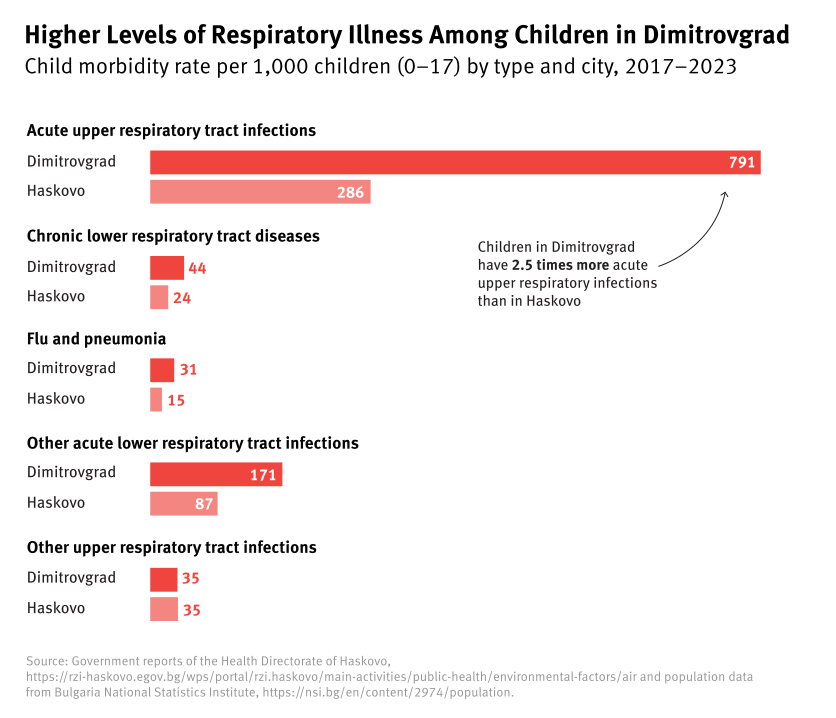
Through extensive data analysis and interviews with residents, experts, and local, national, and EU officials, Human Rights Watch examined the impacts of air pollution in Dimitrovgrad and found that residents experience high rates of respiratory illnesses like bronchitis, asthma, and lung cancer. Children, in particular, appear much more likely to experience respiratory illnesses than those living in nearby cities.
A 7-year-old boy who lives in Dimitrovgrad was diagnosed with chronic asthma when he was six months old. He is frequently hospitalized because of his symptoms and often misses school. “I want the government to know that I no longer want to be sick and that I want clean air to breathe,” he told researchers. Although other sectors also contribute to air pollution in Dimitrovgrad, national environmental authorities have recognized Maritsa 3 as a major source of sulfur dioxide, a pollutant harmful to human health. High levels led to the plant’s temporary administrative shutdown in April 2022.
Through analysis of government air quality data, Human Rights Watch assessed the impact of Maritsa 3’s operation on sulfur dioxide levels in Dimitrovgrad, controlling for several environmental conditions, as well as for the operation and output from other coal plants, approximately 40 kilometers to the east. The research found that the strongest predictor of sulfur doxide levels in Dimitrovgrad is whether Maritsa 3 is operating.
In correspondence with Human Rights Watch, TPP Maritsa 3 AD, which operates Maritsa 3, acknowledged that the plant contributes to sulfur dioxide levels, but stressed that its emissions have complied with current air quality limits and have not resulted in any administrative sanctions since 2022. The company said it was “in the process of strategic planning and assessing the necessary measures in order to adapt to the new, significantly stricter restrictions.”
In both written responses to Human Rights Watch and in-person meetings with national environmental authorities, the Bulgarian government has made clear that it intends to tighten air regulations by 2026. Though less stringent than World Health Organization guidelines, these new standards will better protect public health and advance the right to health in Bulgaria.
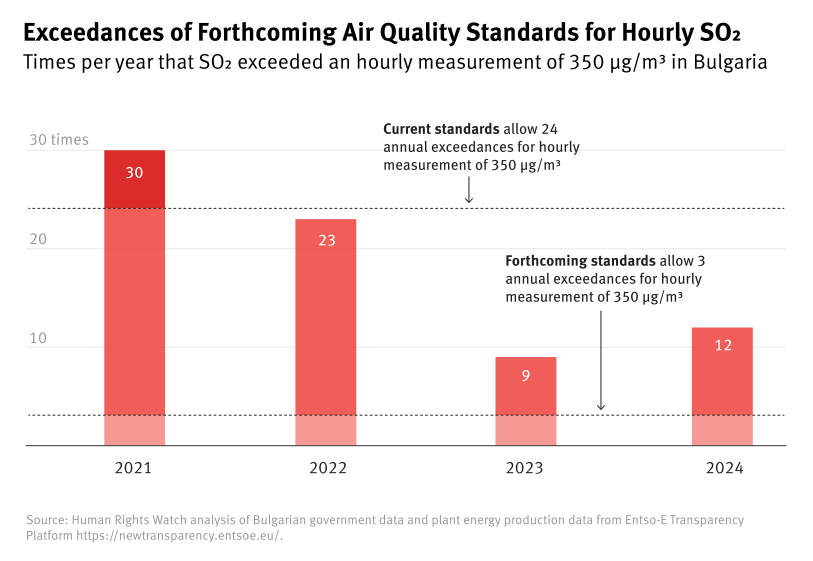
The Human Rights Watch analysis of air pollution data confirms that even if Maritsa 3 continues to operate well below capacity and intermittently shuts down, Dimitrovgrad risks frequently exceeding sulfur dioxide levels once standards are tightened to meet EU requirements.
Bulgaria’s coal phaseout delay has contributed to harming the health of nearby residents and has further slowed Bulgaria’s progress on key energy transition reforms, causing the country to risk losing access to EU funding. Bulgaria could mobilize a range of mechanisms to finance this transition, including through EU funding mechanisms such as the Just Transition Fund and the Recovery and Resilience Facility. However, repeated delays in developing a roadmap for the energy transition and implementing necessary reforms have put €1.2 billion in Just Transition funding and parts of the Recovery and Resilience funding at risk.
“Bulgaria shouldn’t keep delaying its energy transition,” Tilianaki said. “Setting a 2030 coal phaseout date is vital to protect health, honor its EU climate commitments, and ensure a just transition toward a renewable-based economy.”