Reports

How the U Visa Builds Trust, Counters Fear, and Promotes Community Safety

The 50-page report, “‘We Need U’: How the U Visa Builds Trust, Counters Fear, and Promotes Community Safety,” finds that the administration’s deportation policies undermine federal visa programs that provide a pathway for crime victims to obtain legal residency when they cooperate with law enforcement. Changed enforcement guidance, such as allowing Immigration Customs Enforcement (ICE) officials to apprehend people in previously safe places like courthouses and health centers, is a strong deterrent for immigrants who might otherwise report crime to police or seek a protective order.
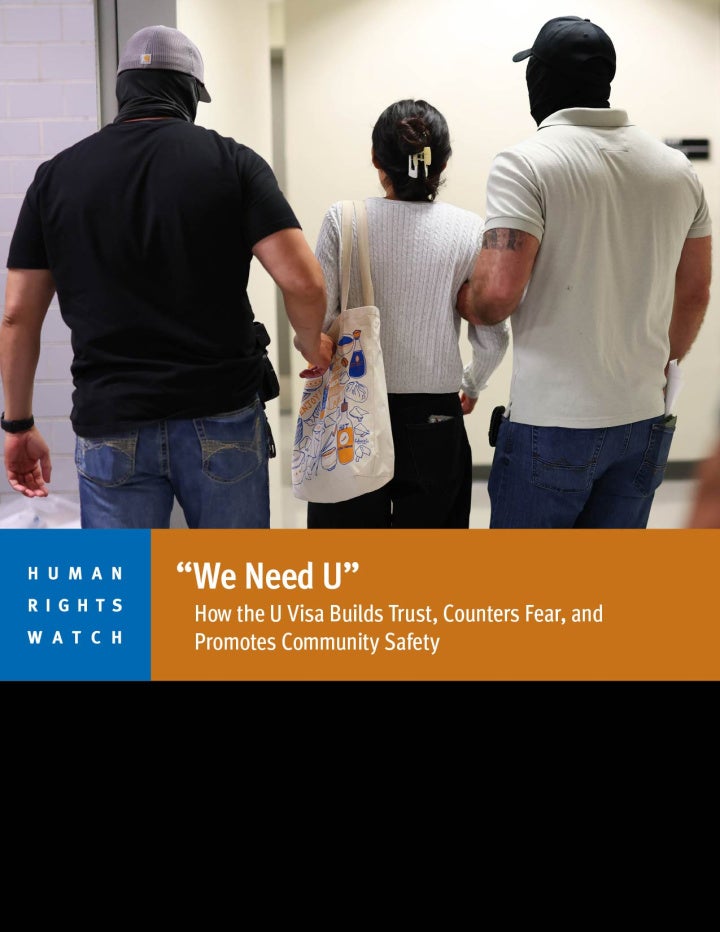


Federal agents detain a woman exiting an immigration court hearing
A woman looks out of the window of a damaged building

Search

  • June 15, 2007

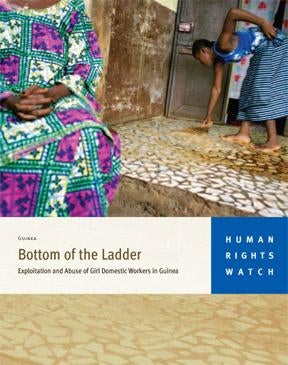
    Exploitation and Abuse of Girl Domestic Workers in Guinea

    This 110-page report documents how girls as young as 8 years old work up to 18 hours a day as domestic workers, frequently without pay, and are often insulted, beaten and raped by their employers.
  • June 1, 2007

    A Teenager Imprisoned at Guantanamo

    In this backgrounder, Human Rights Watch said that although Khadr was just 15 when he was arrested, the United States has completely ignored his juvenile status throughout his detention. The US government incarcerated him with adults, reportedly subjected him to abusive interrogations, failed to provide him any educational opportunities, and denied him any direct contact with his family.
  • May 16, 2007

    The Need for Durable Solutions for Bhutanese Refugees in Nepal and India

    This 86-page report discusses the possible solutions to this protracted refugee situation and the choices the refugees now face.
  • April 17, 2007

    Neighboring States Stop Iraqis Fleeing War and Persecution

    Iraq’s neighbors are refusing entry, imposing onerous new passport and visa requirements, and building barriers to keep refugees out. In certain cases, they are also expelling Iraqis back to Iraq.This briefing paper focuses on new restrictive measures taken by Jordan and Egypt to prevent more refugees from coming.
  • February 27, 2007

    Unprotected Migrants in South Africa

    This 115-page report documents how state officials arrest, detain and deport undocumented foreign migrants, particularly those from Zimbabwe and Mozambique, in ways that contravene South Africa’s immigration law. The report also details how commercial farmers ignore basic employment law protections even when they employ documented foreign migrants and South Africans.

  • January 11, 2007

    Protecting Migrant Domestic Workers’ Rights

    While some governments have already started making meaningful reforms to help domestic workers work in greater safety and dignity, others are pursuing superficial changes that fail to address the root causes of exploitation and abuse. Governments around the world have choices to make about the route they will take; this essay identifies some of the positive options available.
  • November 27, 2006

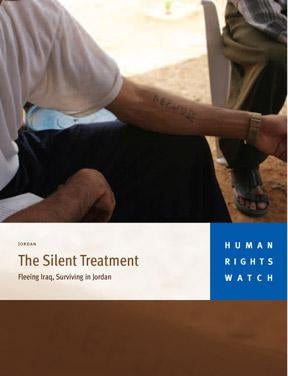
    Fleeing Iraq, Surviving in Jordan

    After fleeing violence and persecution in Iraq, hundreds of thousands of Iraqis living in Jordan face a daily threat of arrest, fines and deportation because the Jordanian government treats them as illegal immigrants rather than refugees. Since the war in Iraq began in 2003, more than 1 million Iraqis have fled, but none of Iraq’s neighbors, nor the United States, treats them as refugees.
  • November 11, 2006

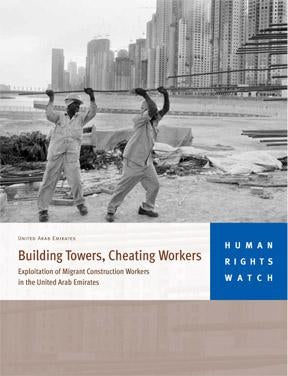
    Exploitation of Migrant Construction Workers in the United Arab Emirates

    Based on extensive interviews with workers, government officials and business representatives, this 71-page report documents serious abuses of construction workers by employers in the United Arab Emirates.
  • September 12, 2006

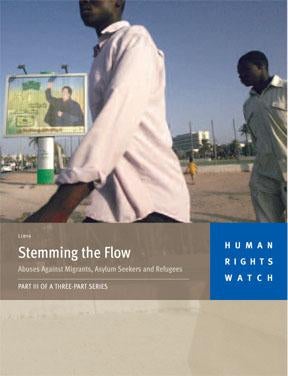
    Abuses Against Migrants, Asylum Seekers and Refugees

    This 135-page report documents how Libyan authorities have arbitrarily arrested undocumented foreigners, mistreated them in detention, and forcibly returned them to countries where they could face persecution or torture, such as Eritrea and S
  • September 9, 2006

    The Perilous Situation of Palestinians in Iraq

    This 42-page report documents the drastic deterioration in the security of the estimated 34,000 Palestinian refugees in Iraq since the fall of Baghdad in April 2003.
  • August 8, 2006

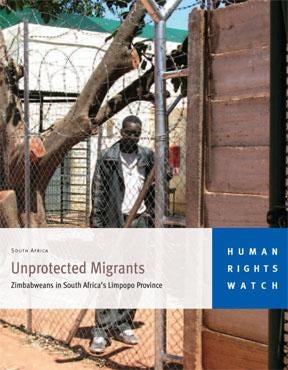
    Zimbabweans in South Africa’s Limpopo Province

    <table cellpadding="3" cellspacing="0"><tr><td><img src="http://hrw.org/images/home/2006/100/safric13923.jpg&quot; align="left" border="0" /></td> <td valign="top">This 54-page report documents how state officials arrest, detain and deport undocumented foreign migrants in the northern border province of Limpopo in ways that flout South Africa’s immigration law.</td></tr></table>

  • July 27, 2006

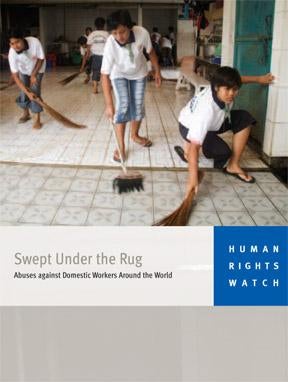
    Abuses against Domestic Workers Around the World

    This 93-page report synthesizes Human Rights Watch research since 2001 on abuses against women and child domestic workers originating from or working in El Salvador, Guatemala, Indonesia, Malaysia, Morocco, the Philippines, Saudi Arabia, Singapore, Sri Lanka, Togo, the United Arab Emirates, and the United States.

  • June 16, 2006

    FNL Child Soldiers in Burundi

    During the thirteen years of civil war in Burundi, children were recruited and used as combatants and general help by all sides in the conflict.
  • May 1, 2006

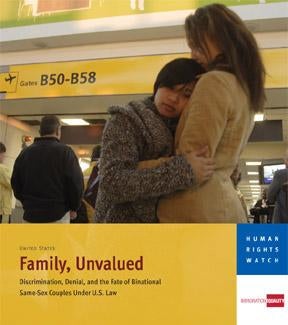
    Discrimination, Denial, and the Fate of Binational Same-Sex Couples under U.S. Law

    <table cellpadding="3" cellspacing="0"><tr><td><img src="http://hrw.org/images/home/2006/100/usdom13290.jpg&quot; align="left" border="0" /></td> <td valign="top">This report documents how U.S immigration law and federal policy discriminate against binational same-sex couples.</td></tr></table>